
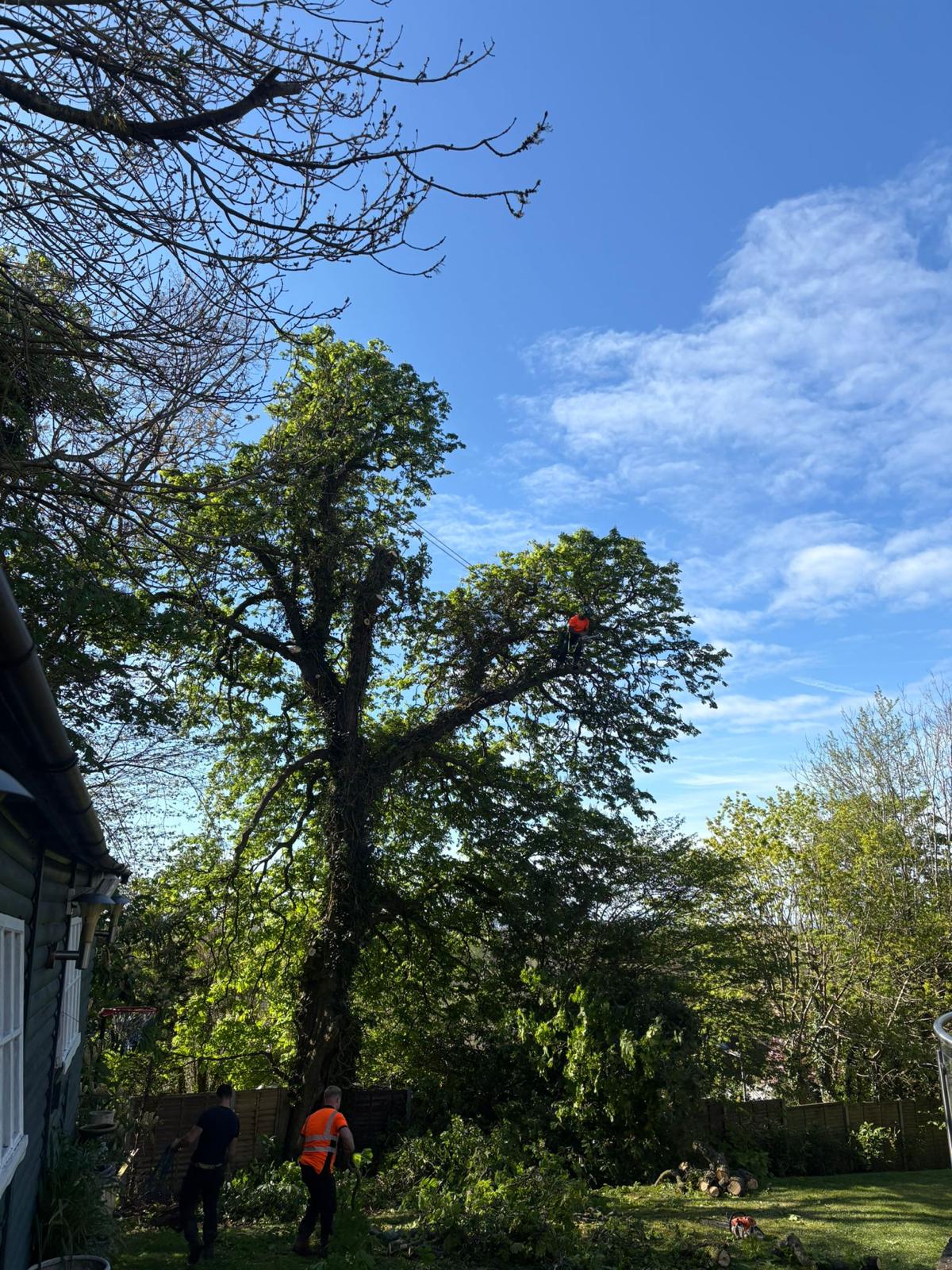
Dead-woodingin Watford & Hertfordshire— safer canopies, healthier trees.
Systematic removal of dead, dying and diseased branches from the crown of your tree. NPTC-qualified climbers, work to BS3998, everything chipped or removed. Peace of mind before the next storm.
9.94/10 across 502 Checkatrade reviews · Free site visit · Fixed-price quote within 24 hours
Watford · Bushey · Radlett · Harrow · St Albans
What dead-wooding actually involves
Dead-wooding is the selective removal of dead branches (typically 25mm and larger) from a tree's crown. Living structure is left untouched — this is purely a safety and hygiene operation.
Any tree owner with mature trees over targets — houses, cars, patios, paths, driveways, playgrounds, car parks. Standard preventive maintenance for street and estate trees.
As routine maintenance on mature trees, typically every 3–5 years. After storm damage. Before summer garden use if the tree overhangs seating or a pool. Before school terms on educational sites.
Dead branches don't announce their departure. They come down in the first strong wind or the first still day when the wood finally lets go — which is why 'a branch fell out of nowhere' is one of the commonest calls we get. Systematic dead-wooding removes them on your schedule, not the weather's.
What happens if you put it off
The dead limb in a mature tree isn't a maybe — it's a certainty. The only question is where it lands and what it hits.
Personal injury liability
As tree owner you owe a duty of care to anyone who might be under the tree. Foreseeable dead limb, no maintenance record, injury — you're liable.
Vehicle & property damage
A 3m dead branch dropping 15m dents cars, wrecks conservatory glass and splits shed roofs. Insurers often won't pay if the tree was obviously neglected.
Disease spread
Dead wood harbours fungal pathogens that spread into living tissue and to neighbouring trees.
Common mistakes we're called in to fix
- Assuming dead branches will fall harmlessly to the ground — most snag on the way down and swing sideways.
- 'Dead-wooding' with a pole saw from the ground — misses most of the crown and often only removes the bottom third.
- Waiting for a storm to sort it — the branches you'd want removed are exactly the ones the storm launches.
- Skipping the paperwork — no record of maintenance is a legal weakness after an incident.
A clear, quoted, tidy job — every time
No day rates. No guesswork on the day. You know what we're doing, when, and what it costs before a single cut is made.
- 1
Free canopy inspection
Ground and canopy inspection to identify dead limbs, hangers and structural defects.
- 2
Fixed-price quote
Per-tree price, written, within 24 hours.
- 3
Climb & inspect
Climber works through the crown identifying every dead limb above the specified diameter.
- 4
Systematic removal
Dead branches removed cleanly at the branch collar; hangers taken down safely.
- 5
Documented sign-off
Walk the finished job with you; keep a record of what was done for your files.
What you actually get when we do the job
Storm-season peace of mind
The limbs most likely to fail have already been removed on the ground.
Reduces owner liability
Documented, dated professional maintenance is the defence you need if an incident ever happens.
Improves tree health
Removing decaying wood reduces the fungal load on the living structure.
Cleaner canopy
Trees look immediately better — no bare dead spikes in the crown.
No damage to living wood
Live structure untouched; correct cuts at the branch collar seal cleanly.
Fixed price, insured
£10m PL, NPTC climbers, written quote — no day rate.
Dead-wooding — the full picture
What we remove — and what we don't
Standard specification is dead wood 25mm diameter and above, though we can quote to 50mm for cost-sensitive jobs or down to 10mm for high-value display trees. We do not remove live wood, disturb epicormic growth on protected trees, or 'tidy' the crown beyond the dead-wood spec — that's crown cleaning or reduction, which is a separate quote.
Hangers, snags and stubs
'Hangers' — dead limbs that have partially broken and lodged in the canopy — are prioritised, since these are the most immediate risk. Snags and stubs from previous poor pruning are cut back to the branch collar so wounds can seal.
Which trees benefit most
Oak, ash, poplar, willow, horse chestnut and lime all shed dead wood readily and benefit from a 3–5 year cycle. Trees with fungal fruiting bodies (bracket fungi) on the trunk or major limbs should be assessed sooner.
Documentation and insurance
We provide a dated invoice describing the work carried out. For commercial and estate clients we can supply a fuller written record and photograph the completed job on request — useful for insurance renewals, sales enquiries and audit trails.
Dead-wooding: your questions, answered straight
How much does dead-wooding cost?
Fixed price per tree or per job after a free site visit — never a day rate. Written quote within 24 hours.
How often should it be done?
Every 3–5 years is typical for a mature tree. Fast-shedding species (poplar, willow) and trees over high-value targets often benefit from more frequent inspections.
Do you use spikes on the tree?
No — spikes damage living bark. Dead-wooding is carried out on ropes and harness, with the climber accessing the crown non-invasively.
Will it change the shape of the tree?
No — dead-wooding removes only dead material. The tree's living silhouette is unchanged.
What if you find something structurally wrong while climbing?
We stop, come down, and talk to you. Anything beyond the dead-wooding spec is discussed, quoted separately and only done with your written agreement.
Do I need TPO consent?
Removal of dead wood is generally exempt from TPO controls, but we still check the register on your behalf and notify where required.
How long does a job take?
Most single mature trees: half a day. Larger or awkward trees: full day. Confirmed on the written quote.
What do you do with the wood?
Chipped on site or removed under our Environment Agency waste carrier licence, included.
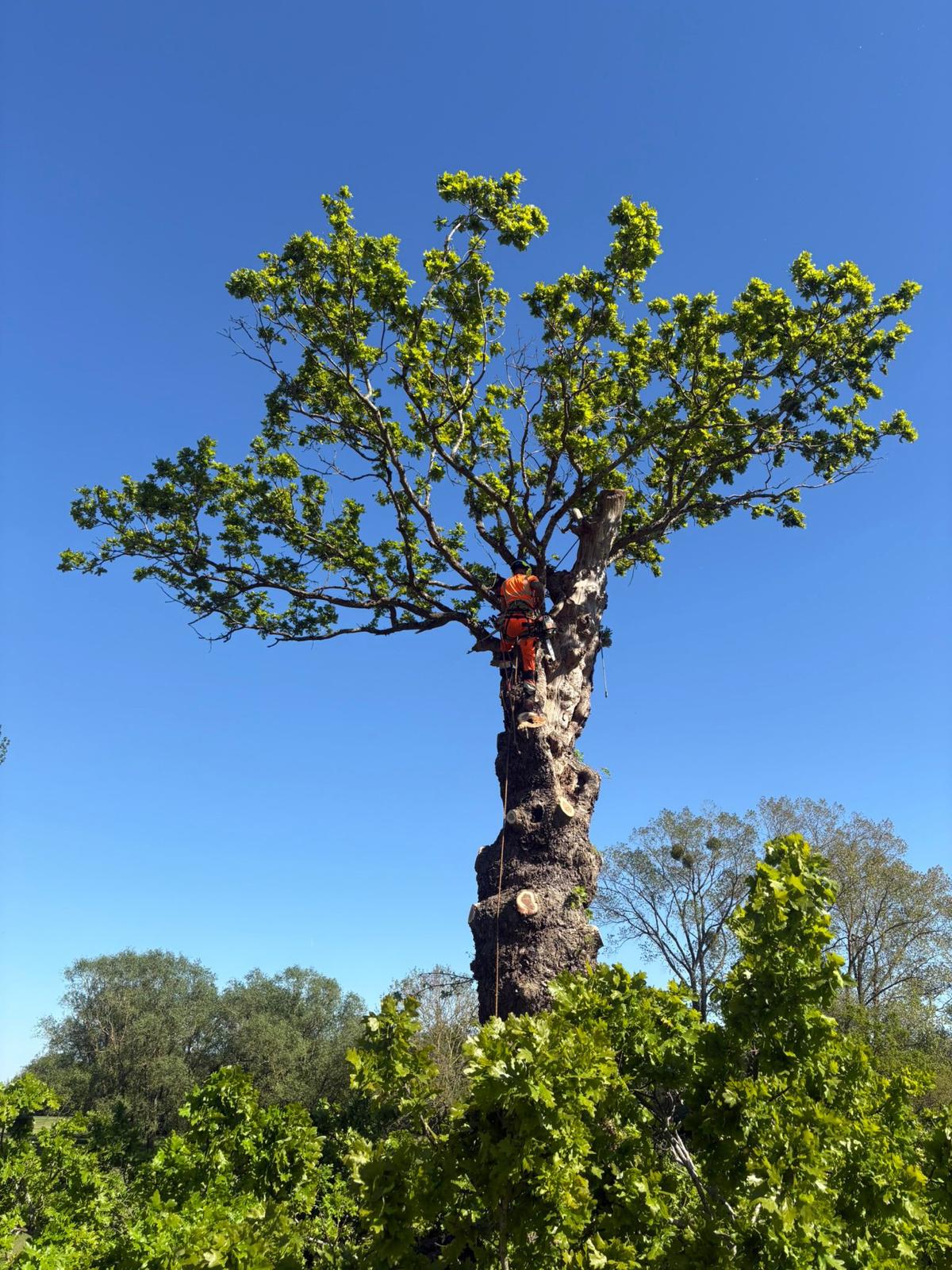
Ready to sort your dead-wooding? Get a fixed price in 24 hours.
Free site visit. Written quote — not a day rate. Council TPO paperwork handled on your behalf. Full clean-up and all waste chipped or taken away under our Environment Agency waste carrier licence.
- Owner-led team — Sam or the team quote every job in person
- £10m public liability + £5m employers' liability
- NPTC CS39 climbers, City & Guilds qualified
- 24/7 phone answered for emergencies
Request your free quote
Tell us what you need — we'll come and take a proper look.