
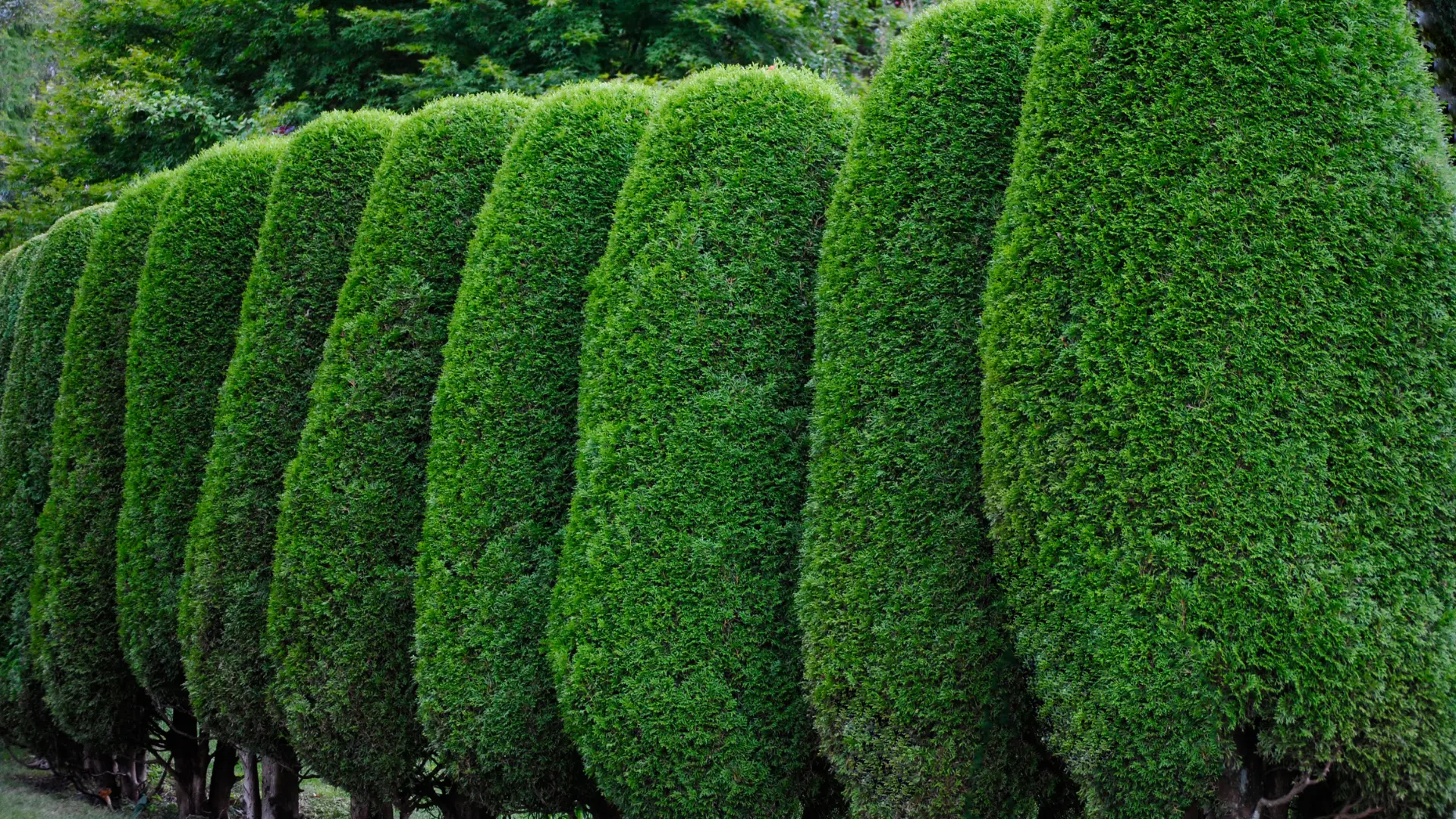
Hedge Trimming & Shapingfor gardens across Herts— crisp lines, healthy hedge.
Formal or informal, tall or awkward-access — we trim to a clean line, tidy the sides, and take every scrap of clipping away. Regular maintenance schedules available; one-off tidy-ups very welcome.
9.94/10 across 502 Checkatrade reviews · Free site visit · Fixed-price quote within 24 hours
Watford · Bushey · Radlett · Harrow · St Albans
What hedge trimming & shaping actually involves
Cutting a hedge back to a defined line and profile — top and both sides — using professional hedge cutters and, on tall hedges, from ladders or MEWPs where needed. The clippings are removed as part of the job.
Homeowners with garden hedges of any height, landlords maintaining rental gardens, and commercial sites with boundary or feature hedging. Common species: laurel, yew, beech, hornbeam, privet, box, leylandii, thuja.
Formal hedges: 2–3 times per year (typically late spring, mid-summer, early autumn). Informal hedges: once or twice a year. New hedges: light trims in the first 2–3 years to build density from the base up.
Untrimmed hedges quickly turn bare and woody at the base, brown at the top, and unstable in wind. Once a hedge has 'run away' — 3–4m over — recovery pruning is a specialist job and some species (leylandii, laurel) don't regenerate from bare wood at all.
What happens if you put it off
Skip a couple of years and the hedge you loved becomes a boundary problem: over the neighbour's side, blocking the pavement, dying out at the base and dropping needles on the drive.
Bare, ugly bases
Once a hedge shades itself out at the bottom, most species (especially leylandii and conifers) never re-grow leaves there.
Legal boundary issues
High Hedges Act (Part 8 Anti-Social Behaviour Act 2003) covers evergreen boundary hedges over 2m — councils can enforce reductions.
Storm collapse
Tall, top-heavy hedges split down the middle in gales. Rebuilding a mature hedge takes 5–10 years.
Common mistakes we're called in to fix
- Cutting a hedge into a vertical wall — starves the lower foliage of light. Should always be slightly wider at the base than the top ('A' shape).
- Cutting into old wood on leylandii, laurel or conifers — they don't regenerate. The bare patch stays.
- Trimming during nesting season (March–August) without checking for active nests — a wildlife offence under the Wildlife and Countryside Act 1981.
- Leaving clippings to smother the base — kills grass, invites disease.
A clear, quoted, tidy job — every time
No day rates. No guesswork on the day. You know what we're doing, when, and what it costs before a single cut is made.
- 1
Free assessment
We measure, check species and condition, and agree the shape and finished height.
- 2
Fixed-price quote
Per-job price — within 24 hours.
- 3
Nest check
Every hedge visually checked for active nests before cutting during bird season.
- 4
Trim to line
Even cuts, correct profile, working from a stable platform where height demands it.
- 5
Clear & tidy
All clippings collected, driveway swept, everything taken away.
What you actually get when we do the job
Sharp, defined lines
Clean profile with a slightly tapered face so light reaches the base.
Denser growth
Regular trimming stimulates side-shoot production and thickens the hedge.
No mess left behind
We collect, bag or chip and remove — you don't touch a clipping.
Wildlife-aware
Nest checks as standard during breeding season.
Regular schedules
Twice-a-year or three-cut annual contracts available at a fixed annual price.
Height covered
From knee-high box to 6m leylandii and beyond — properly equipped for tall work.
Hedge Trimming & Shaping — the full picture
Formal vs informal hedges
Formal (box, yew, privet, beech, hornbeam) benefits from 2–3 cuts a year to hold a crisp architectural line. Informal (mixed native, flowering shrubs) needs only 1–2 cuts and lighter shaping to preserve blossom and berries.
New hedges (first 3 years)
The single biggest mistake with a new hedge is not trimming it in year one. Light, regular tip-pruning while it's young builds density from ankle-height up. A hedge trimmed properly in years 1–3 is the hedge you'll enjoy for the next 30.
Reducing an overgrown hedge
For a hedge that's 'got away', we plan a controlled reduction over 1–3 seasons depending on species. Broadleaves (beech, hornbeam, yew, laurel) can be cut hard and will re-shoot. Leylandii, thuja and most conifers won't regenerate from brown wood — for these, reduction has strict limits and honesty about the outcome matters more than a good sales pitch.
Nesting season and the law
It's an offence under the Wildlife and Countryside Act 1981 to disturb an active bird's nest. Between March and August we visually check every hedge before cutting; where nests are active we return once fledglings have gone. This is non-negotiable.
Hedge Trimming & Shaping: your questions, answered straight
How often should my hedge be cut?
Formal hedges: 2–3 times per year. Informal: 1–2. New hedges: light trims two or three times in the first year to encourage density.
When is the best time?
Late spring, mid-summer and early autumn are the classic windows. Avoid heavy work during main nesting (March–August) unless a nest check confirms it's safe.
How much does hedge trimming cost?
Fixed price per job after a free site visit — never an hourly rate. Written quote within 24 hours.
Can you cut very tall hedges?
Yes — up to and beyond 6m. Tall work is priced accordingly and carried out from a stable platform or MEWP where needed.
Will you take away all the clippings?
Yes — every job includes full clean-up and removal under our Environment Agency waste carrier licence.
Can I cut a hedge on the boundary that overhangs my garden?
Legally you can cut back to the boundary line, but you must offer the arisings back to the owner and can't damage the health of the hedge. In practice a written note to the neighbour before work solves this.
Do you offer regular maintenance contracts?
Yes — 2- or 3-cut annual schedules at a fixed annual price, invoiced per visit or annually.
What about very old, bare-based hedges?
We're honest: species like leylandii don't regenerate from bare wood. Broadleaves usually can be renovated over 1–3 seasons.
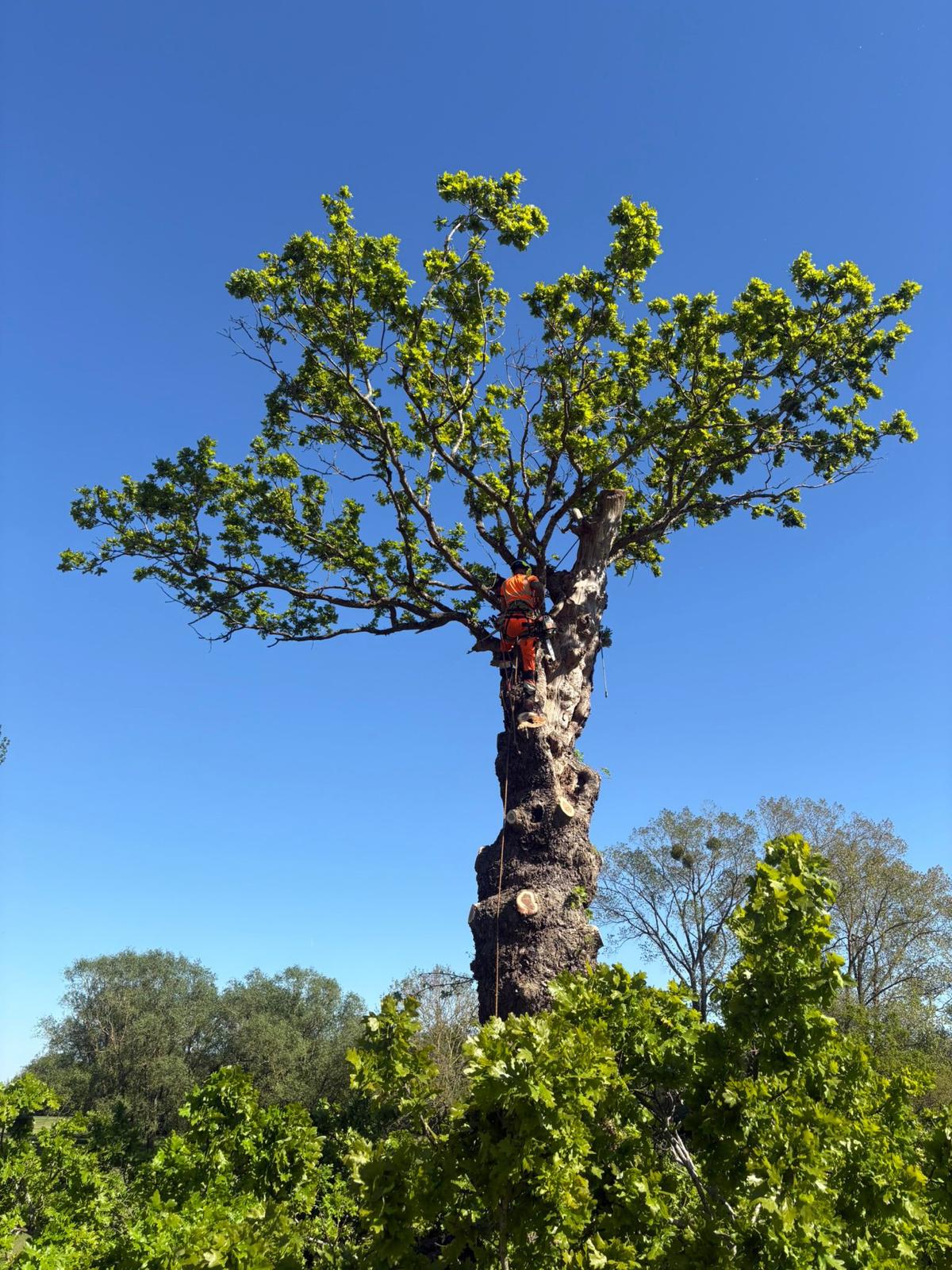
Ready to sort your hedge trimming & shaping? Get a fixed price in 24 hours.
Free site visit. Written quote — not a day rate. Council TPO paperwork handled on your behalf. Full clean-up and all waste chipped or taken away under our Environment Agency waste carrier licence.
- Owner-led team — Sam or the team quote every job in person
- £10m public liability + £5m employers' liability
- NPTC CS39 climbers, City & Guilds qualified
- 24/7 phone answered for emergencies
Request your free quote
Tell us what you need — we'll come and take a proper look.